YET2245-SE Energy-Storage Remote Control: Multi-Frequency Universal Duplicator for Fixed-Code and Rolling-Code RF Systems
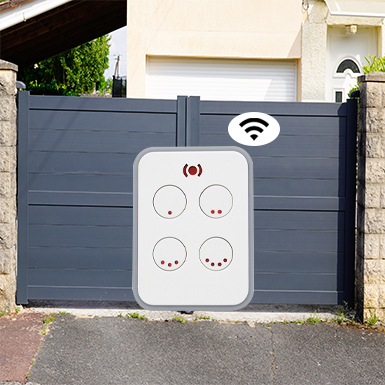
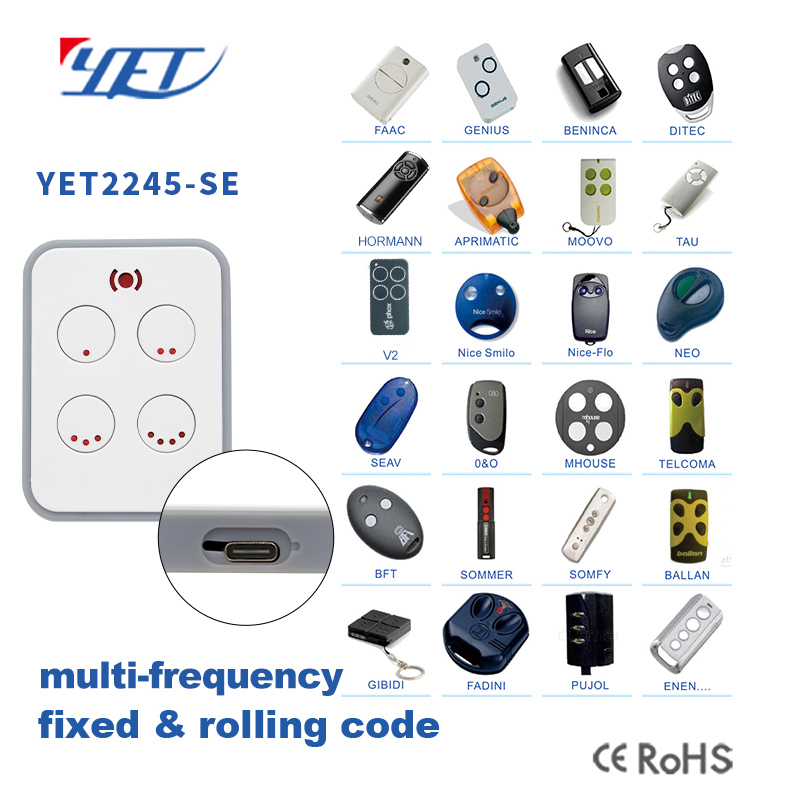
In modern residential, commercial and industrial environments, radio-frequency remote controls operate countless pieces of access-control and automation equipment. Homeowners, locksmith technicians, e-commerce retailers and installers frequently face real-world pain points: lost original fobs, dead disposable coin-cell batteries, fragmented brand protocols, and incompatibility between cheap copy remotes and mainstream rolling-code receivers. The newly-launched energy-storage remote control breaks many existing limitations of traditional cloning remotes. It covers a wide frequency band of 280-868 MHz, capable of copying most mainstream rolling-code brand remotes as well as legacy fixed-code transmitters, bringing simplified operation, eco-friendly rechargeable power supply and broad cross-industry adaptability.
To understand its value, users must first distinguish between fixed-code and rolling-code remote-control technologies. Fixed-code remotes transmit identical digital signals upon every button press. Early garage doors, barrier gates and shade controllers widely adopted this solution due to low hardware costs. However, static signals can be easily intercepted and replayed, creating security loopholes for property access. Rolling-code (hopping-code) technology was invented to mitigate replay-attack risks; each button press generates a brand-new encrypted code that becomes invalid after one use. Major manufacturers of garage openers, vehicle anti-theft alarms and access locks have adopted rolling-code chips for higher-security applications. Yet most low-cost market duplicators can only clone simple fixed-code waveforms. They fail to properly capture rolling-code synchronization parameters, resulting in copied remotes that do not work or drop codes after a few uses, forcing users to return goods or seek professional locksmith support. Many old-style copy remotes rely entirely on disposable coin batteries. Frequent battery replacement generates electronic waste, and sudden power failure leaves users stranded when they need to open garage doors or vehicle tail plates urgently.
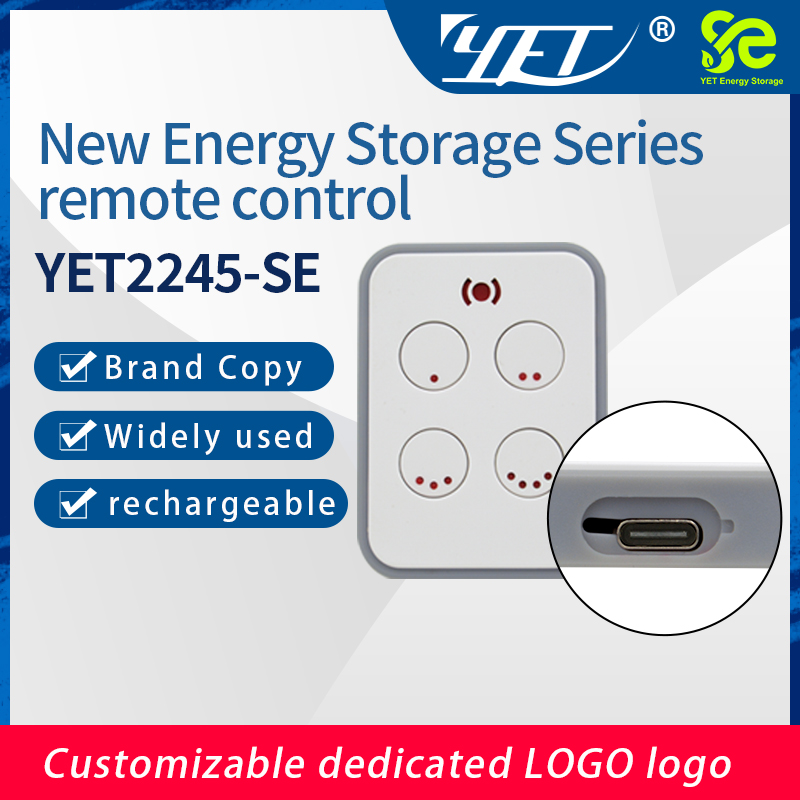
This energy-storage remote control addresses these common industry shortcomings. Its 280-868 MHz full-range frequency coverage automatically scans and identifies signals from original remotes, supporting both fixed-code chips and multiple mainstream rolling-code protocols without complex manual frequency adjustment. The copying workflow stays highly user-friendly, similar to standard garage-remote pairing operations: place the energy-storage remote and original remote close together, activate copy mode, press target buttons on the original fob, and complete signal learning within a few button taps. No professional programming tools, no receiver-side button-press configuration in most common scenarios, and no requirement to refer to obscure manufacturer manuals. After successful copying, non-volatile memory preserves all learned code data, so stored configurations will not disappear after charging cycles.
The product fits a remarkably broad spectrum of application scenarios across multiple vertical industries. For gate-and-door control, it serves garage door openers, rolling shutters, driveway barrier gates, retractable gates and pedestrian access doors. Homeowners can quickly make spare remotes for family members without purchasing expensive branded original fobs. Locksmith technicians keep this compact unit in their toolkits for on site repair and replacement work, handling both old fixed-code installations and newly-installed rolling-code access hardware. In smart-home and shading markets, it copies remotes for motorized window blinds, roller shades, awning systems and wireless LED light controllers, consolidating multiple separate remotes into one single key-fob-sized device. Vehicle-related use cases include motorcycle anti-theft alarm systems and electric vehicle tail-plate controllers. Security-oriented deployments cover wireless emergency trigger buttons for building safety alarms. E-commerce sellers benefit from its wide compatibility, as one SKU can replace dozens of single frequency, brand-specific remote models, lowering inventory pressure.
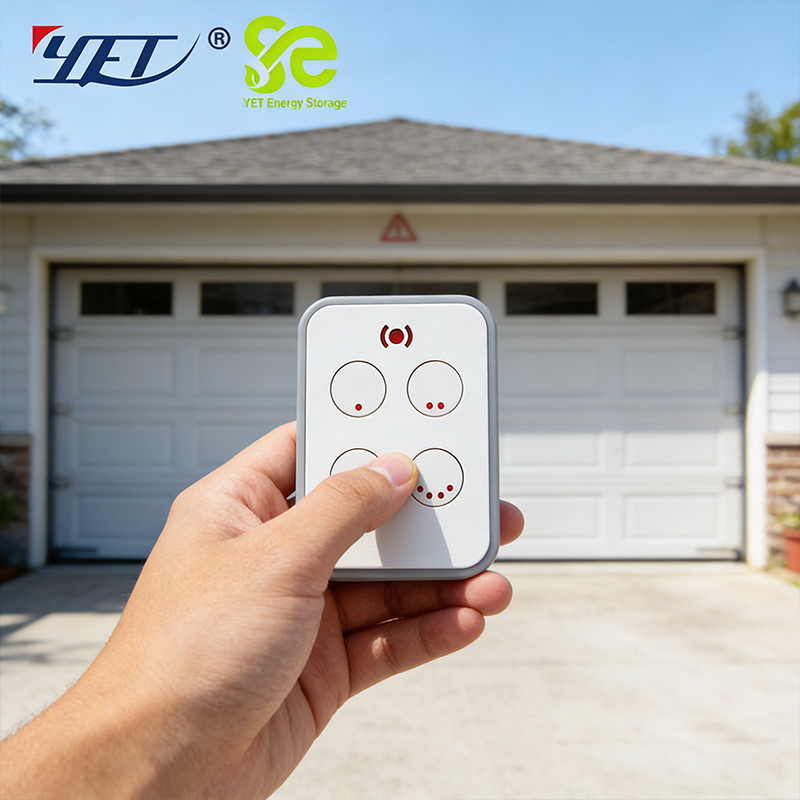
When compared side-by-side with mainstream competing copy remotes on the market, its differentiated strengths become obvious. Most conventional universal duplicators still use replaceable coin-cell batteries. Users need to stock spare batteries, and dead batteries happen unexpectedly. Disposable batteries also continuously add to environmental waste. Our energy-storage remote adopts built-in rechargeable energy-storage battery hardware with TYPE-C charging interface, 5V/1A input and output voltage specification. Charging time is less than 10 minutes; the indicator light turns off when fully charged. A single full charge supports over 6 months of use (based on 10 uses per day). Its physical dimension measures only 61*36.5*13 mm, with clean white color housing; the slim profile easily fits onto keychains, pockets or tool pouches.
Many competing multi-frequency copy remotes advertise wide frequency coverage but suffer poor rolling-code compatibility. They may successfully record RF waveforms, yet lack complete rolling-code synchronization data. After short-term normal operation, the receiver and copied remote lose sync, causing “code-dropping” failure that forces re-copying every few weeks. This energy-storage remote implements optimized rolling-code learning logic to capture necessary counter-seed information, maintaining stable synchronization with rolling-code receivers for long-term daily use. Numerous cheap alternatives demand complicated multi-step operations: confusing button-combination sequences that confuse ordinary consumers and generate high product-return rates. This device streamlines user interaction; average household users can finish remote duplication following printed quick-start guidance without technical background.
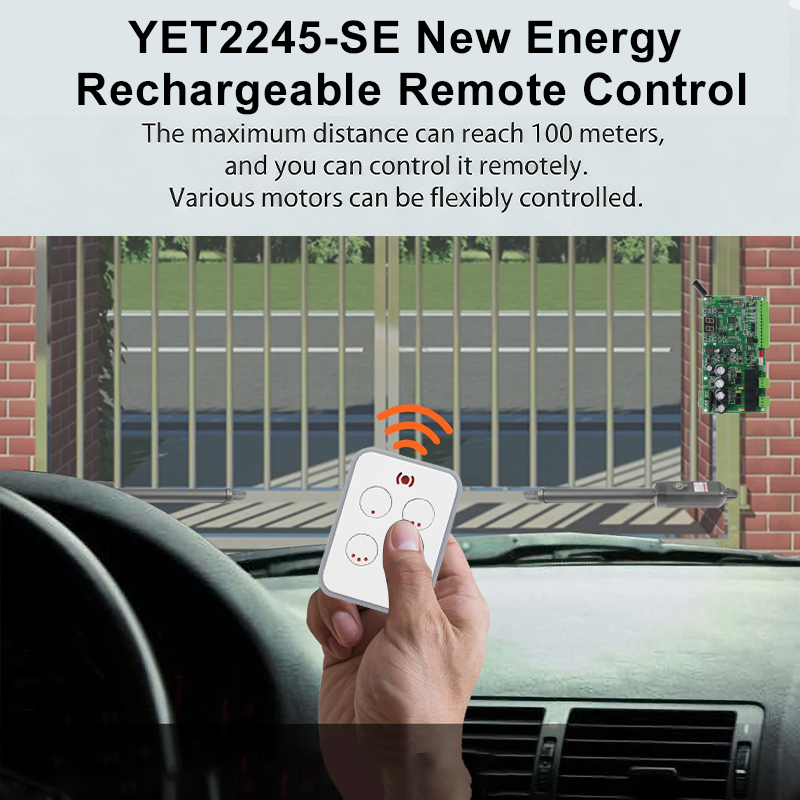
Eco friendly performance is another highlight. By shifting from throw away coin cells to rechargeable energy-storage power, it reduces frequent battery consumption. For families with several spare remotes, or locksmith businesses processing large volumes of remote-copy jobs, the cumulative reduction in discarded button-cell waste delivers tangible environmental benefits. Users no longer need to hunt for matching replacement batteries at convenience stores or hardware shops; any common TYPE-C phone charging cable can power this remote. Whether at home, in a vehicle, or at a job-site, charging access remains simple and convenient.
Real-world practical scenarios demonstrate its value. Imagine a residential user whose garage-door remote gets lost. Instead of waiting for slow original-part shipping or paying high service fees for installer visits, they can duplicate a working replacement within minutes. Property managers for apartment complexes can deploy these remotes for maintenance staff to operate multiple access gates and rolling-shutter units. For retail e-commerce customers receiving the product by mail, the simple copy procedure removes barriers for end-users who cannot call technicians. Even for legacy devices mixed with newer rolling-code hardware, the wide 280-868 MHz spectrum handles both generations without buying two separate duplicator gadgets.
Naturally, users should note practical limits: some highly proprietary encrypted rolling-code protocols from certain premium manufacturers cannot be duplicated by any consumer-grade copy remote device, and in such cases original learning via the motor receiver board remains the correct procedure, just as standard garage-remote pairing guides describe. But for the vast majority of mass-market fixed-code and mainstream rolling-code remotes circulating globally, this energy-storage remote delivers reliable duplication performance.
To sum up, this energy-storage remote control redefines expectations for universal RF copy remotes. The combination of broad 280 868 MHz frequency range, robust compatibility with fixed-code and major rolling-code remotes, TYPE-C fast-charging energy-storage power supply, compact form-factor, simplified user workflow and eco-friendly design sets it apart from traditional battery-powered competitors. It serves homeowners, locksmith professionals, e commerce merchants and installers across door-access, shading, smart-home, vehicle-security and industrial-control verticals. As wireless RF automation hardware continues spreading in households and commercial premises, this universal duplicator provides a practical, sustainable and cost-effective solution for replacing and expanding remote-control hardware.
YET870-V2.0 Dual Motor Swing Arm Door Controller | Intelligent Control Core for Double Open Doors
How to Install Wireless Infrared Beam Sensors for Garage Security?
Related Article