What Are Locksmiths Really Choosing When They Pick a Radio Remote? — A Buying Checklist from a Ten-Year Veteran
The longer you work as a locksmith, the clearer one lesson becomes: every door you open earns you money for your craft, but every remote you sell earns you a repeat customer.
Lost car keys, garage door remotes that stop working, access control fobs that won't copy, rolling shutter doors that need a spare handset — jobs like these come in every day. Sell a remote that fails three months later, and the customer is back at your door saying, “Boss, it's not working again.” All the reputation you've built up takes a hit in one go.
1. Ask Yourself First: What Kind of Jobs Are You Taking On?
Different jobs call for completely different remotes.
Table
|
Common Scenario |
Typical Frequency |
Common Protocol |
Selection Notes |
|
Home rolling shutter / garage door |
433.92 MHz, 315 MHz |
Fixed code / learning code |
Wide compatibility, fast copying |
|
Residential unit entrance / access control |
433 MHz, 315 MHz |
Mostly learning code |
Enough range, resistant to interference |
|
Vehicle anti-theft / aftermarket alarm |
315 MHz, 433 MHz |
Fixed code / learning code |
Compact, foldable |
|
High-end garage door (LiftMaster, Sommer, etc.) |
315 MHz, 868 MHz |
Rolling code (Security+ 2.0, etc.) |
Must support rolling code regeneration |
|
Courtyard gate / industrial barrier |
433 MHz, 868 MHz |
Fixed code / rolling code, both |
Outdoor protection, long battery life |
2. Copy-Type Remotes: Good Looks and Easy Sales — But Watch These Three Points
Copy-type (clone) remotes are the highest-volume category in a locksmith's daily business — simple to operate and well accepted by customers. But keep a close eye on these points when buying:
1. Copying distance must be sufficient
A good copy remote clones the original from 1–3 cm away within 5 seconds. A poor one needs both hands pressed tight and a dozen tries before the light blinks — with the customer standing right there watching, even you feel embarrassed.
2. Frequency coverage must be complete
A mainstream volume model should cover at least the 315 / 433.92 MHz bands; if you do export work or serve high-end communities, it's worth also stocking 390 MHz and 868 MHz. Carrying one “universal multi-frequency” remote is worse than keeping two genuinely multi-band units ready.
3. Can it regenerate rolling codes?
3. Feel and Build Quality: The 10 Seconds in the Customer's Hand
Once a remote is sold, the first thing the customer does is press a button and weigh it in the hand.
Casing: ABS plastic should be thick and not turn white when bent apart; PC+ABS alloy is even better — it won't warp or yellow after baking in a car all summer.
Buttons: silicone buttons that spring back when pressed — no mushiness, no sticky feel; a lifespan of at least 250,000 presses.
Silk-screen vs. laser marking: silk-screen printing loses its lettering within a year, while laser engraving lasts five — for high-end jobs, always pick the laser-marked version; customers feel the money was well spent.
Battery compartment: the CR2032 spring contacts should be tight, with no rattle when shaken; for A23 battery models, watch out for oxidation on the contact springs.
Belt clip / key ring: the clip spring should be firm, and the key ring should be metal — avoid those plastic rings that snap after two uses.
Customers can't put these details into words, but whether they come back to you next time rests entirely on this feel in the hand.
4. Remote Range: Know What to Expect Before You Go On-Site
The common promise in the industry is “50–100 meters in open areas.” But at the customer's place, with the car downstairs and the garage two levels underground, load-bearing walls and reinforced concrete in between — 15–25 meters in practice already counts as a pass.
Two things to watch when sourcing:
Is the antenna a PCB on-board antenna or an external flexible antenna? In communities with lots of signal shielding, external-antenna models are noticeably more stable.
Ask the supplier whether the antenna was retuned after the housing was molded. Testing an antenna on the PCB is one thing; inside a plastic shell it's another. Small factories skip this step, and the range gets cut in half.
5. Certification and Compliance: Don't Wait Until You Get Caught
For domestic business, look at 3C; for Southeast Asia, SIRIM / NTC; for Europe, CE RED is mandatory; for the US, FCC.
Selling a few units over the counter is no big deal.
But once you take on property management contracts, engineering jobs, or open a store on an e-commerce platform, if the supplier can't produce certificates, the whole batch can be seized.
Before signing with a supplier, ask them to send the FCC / CE / RoHS reports for the same batch — a quick glance to confirm the dates and model numbers match is enough. Factories that have genuinely done certification can pull these documents out at any time; those that can't — well, you know what that tells you.
6. Sourcing: The Three Hidden Concerns Locksmiths Really Care About
The longer you stay in the trade, the more you realize that choosing a supplier matters as much as choosing the product.
1. Can the MOQ be flexible?
A small shop ordering 50 or 100 units at a time is the most common rhythm. A factory demanding a 1,000-unit MOQ simply doesn't match your pace. A long-term partner is one that supports small, mixed-batch orders — and ideally custom printing with your own shop logo.
2. Can faulty units be replaced, and is there tech support?
With high-volume products, defect rates of a few per thousand are normal. What matters is whether broken units can be exchanged and whether someone actually answers the phone on technical issues. If you can't pair or copy a code on-site and the factory won't reply on WeChat, the job falls through — and the customer ends up paying the transport costs out of pocket.
3. Can the exterior carry your own shop logo?
A remote printed with your shop name and phone number is a mobile billboard hanging on the customer's keychain 24 hours a day. A factory that can laser-mark at low order quantities is worth a long-term partnership.
7. A Purchase Checklist You Can Use Right Away
For a new locksmith's first restock, build the inventory along these lines:
433.92 MHz copy models (1/2/3-button): 20–30 each — your volume workhorse
315 MHz copy models (2-button): 10–20 — for North American / older vehicle models
Rolling-code regeneration models (HCS301 solution): 3–5 — keep on hand for high-end jobs
Wall / access-control models (with adhesive backing or screw holes): 10 — for residential retrofit projects
CR2032 and A23 spare batteries: 50 of each
Blister-card packaging: get matching packs from the factory to sell off the shelf
The total outlay is modest, but it covers 90% of your day-to-day on-site scenarios.
A Final Word
Remotes don't look technically demanding, but truly achieving “sold without callbacks, customers never coming back to complain” is all in the details.
In this trade, craftsmanship is the foundation — but whether the little box at your side is dependable decides whether a one-time lockout customer becomes a ten-year regular.
Choosing the right batch of remotes is like adding one more lock to your own reputation.
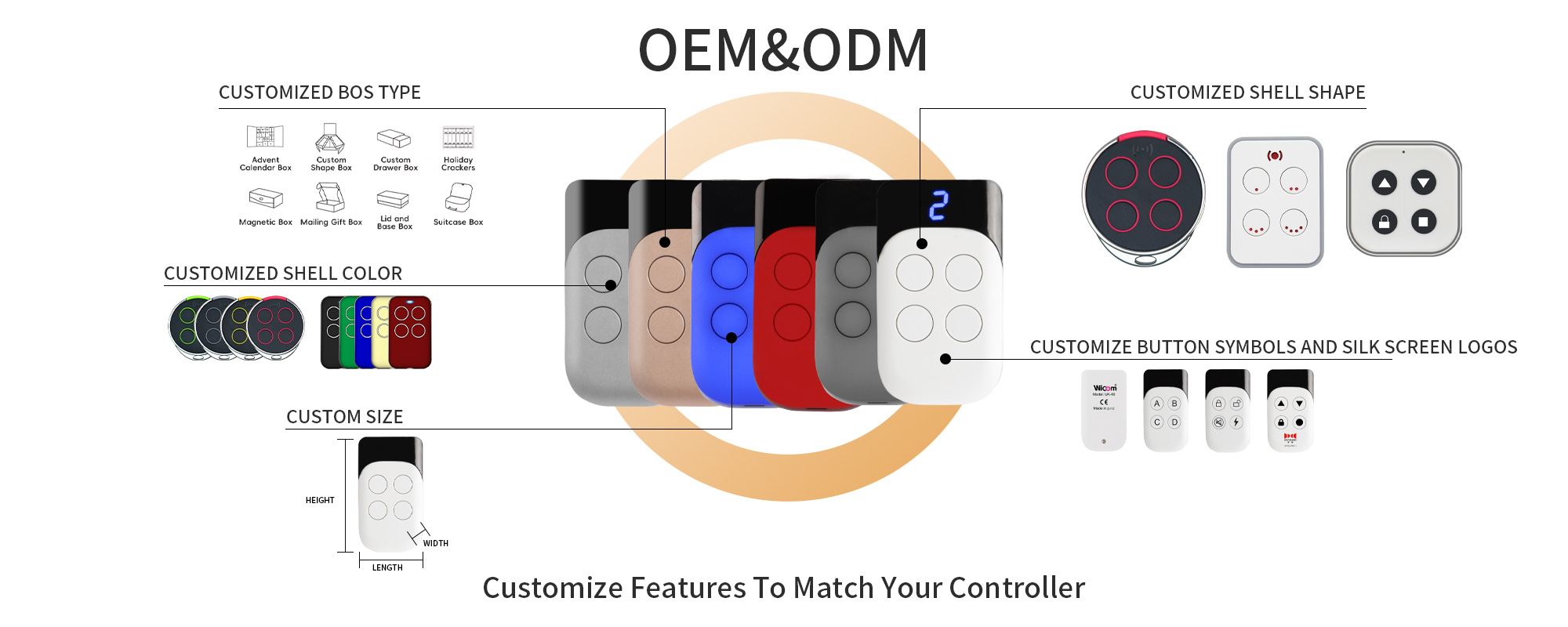
OEM & ODM Customization: Key Insights for Remote Control Manufacturing
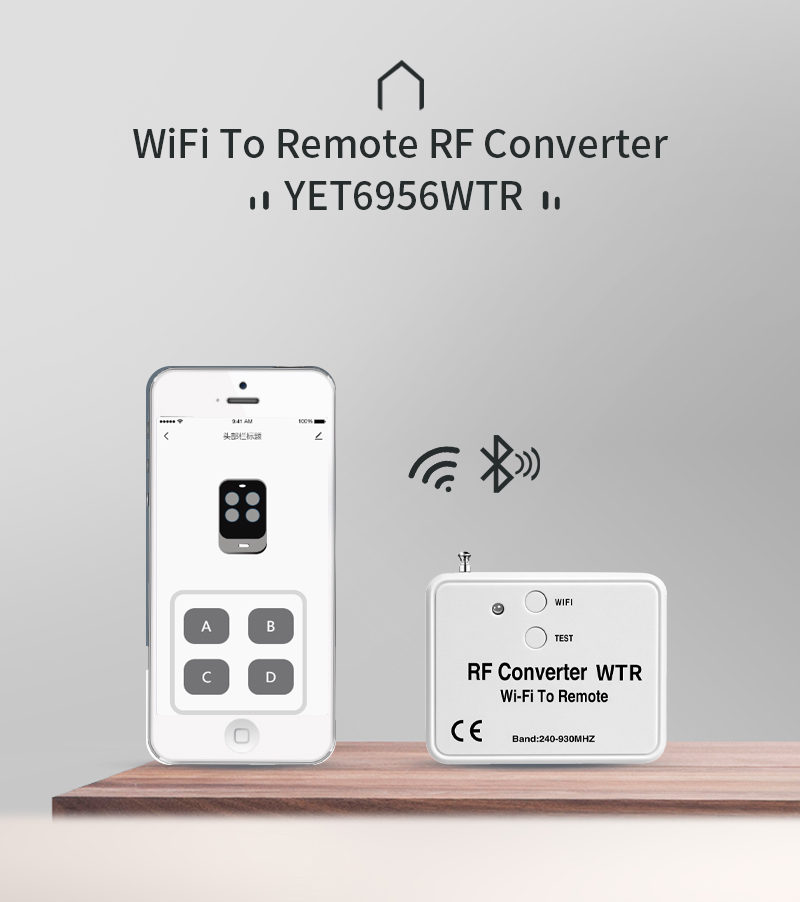
YET6956WTR Tuya wifi to rf converter
Related Article